Agents come and go. The context stays.

Three layers. Only one of them should hold the truth.
The company's knowledge, in plain files it owns, that every agent reads.
Where each problem shows up, and where it's fixed
- 1Two agents give different answersEach agent keeps its own copy. Fixed when every agent reads one approved layer.
- 2Brilliant on a laptop, dumb in productionContext was stuck on one machine. Fixed when context lives outside the runtime.
- 3Switching models means starting overContext sat inside one vendor's tool. Fixed by plain files every model reads.
- 4An agent reads what it shouldn'tHappens when agents reach sources directly. Fixed by giving each agent only the knowledge its job needs.
- 5Nobody can say what the AI was working fromFixed by recording every read (person or agent, document, time) and keeping every approved version.
- 6Search gets worse as the drive growsAgents searching raw storage. Fixed by distilling an approved set.
- 7Answers from last year's policyOld versions sit next to new ones. Fixed when agents read the current approved version.
One person's AI, then everyone's, then governed.
One person, one agent, their own files. It works, because it's yours.
Memory sits inside one agent. Context sits under all of them.
No layer
Every agent wires into every source with its own permissions and its own idea of what's current. Three agents and four sources means twelve connections, and it grows with every agent you add.
Memory tools
Each agent remembers what it learned, written by the agent itself. The memories aren't shared, nobody approves them, and they stay inside that app.
Governed context layer
Sources feed one layer. Every agent reads it, scoped to its job. Add an agent and it starts with everything it's allowed to know.
Run them wherever they're cheapest and most capable.
Run the CRM and project boards anywhere ordinary web software runs. Run long agent jobs wherever they work best: a laptop, a small always-on machine in the office, or a cloud runner. Because the context lives in the layer, moving a job doesn't lose anything.
That matters because an agent on your own machine is unusually capable: it has your logins, your files and no time limit. Boxed into a web app with narrow credentials and a metered bill, the same agent gets much less done. Keep the knowledge portable and you can pick the runtime job by job.
You already budget for identity, security and data layers.
This is the layer that decides what your AI may treat as true. Few teams have a name for it yet, even when they're living with the problem, so start from the symptom.
Find yours →Owners approve. Agents read the approved version. Every read is on the record.
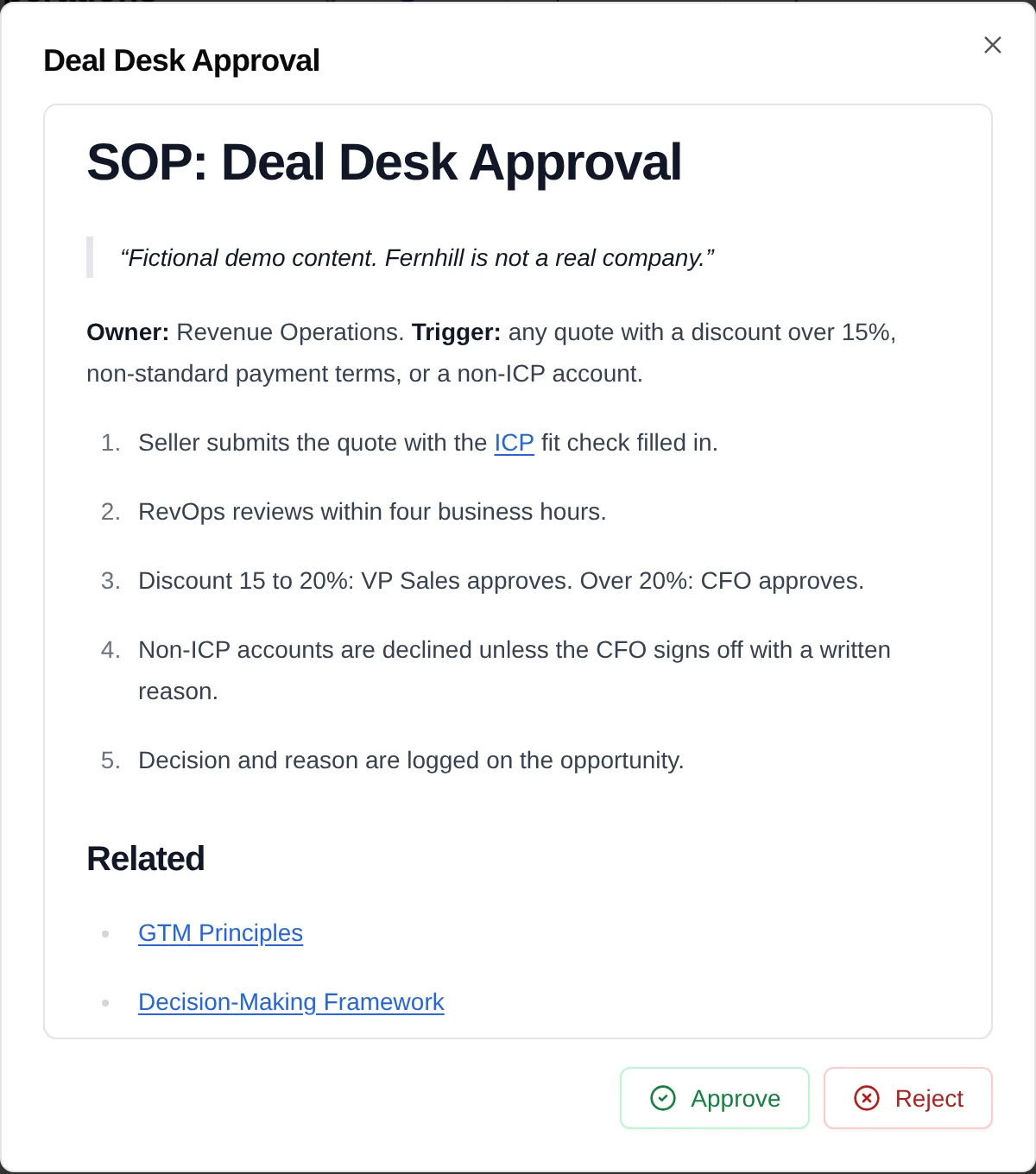
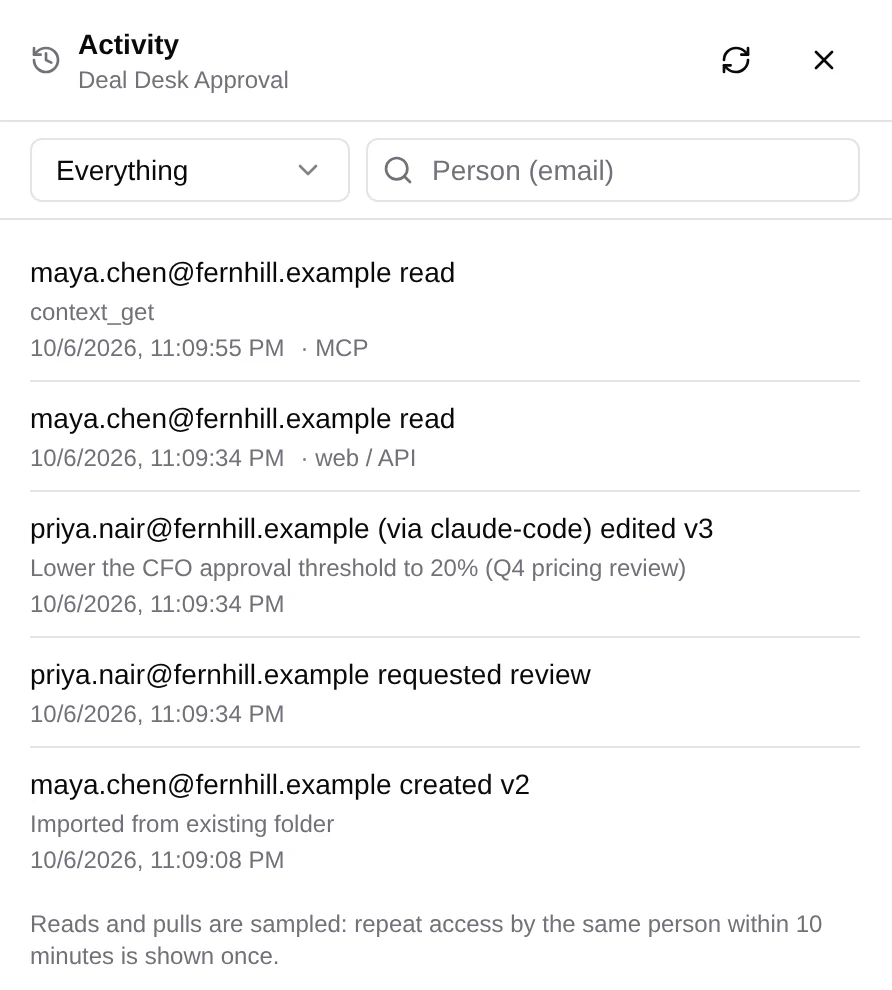
Screenshots from ContextNest Community 1.28, using a fictional demo company.
“The great thing about working with the PromptOwl team is that they're willing to dance. We don't know exactly what we want because AI in education is so new — but they adapt with us. You don't find that kind of partnership very often. It's rare.”

Why teams pick ContextNest
Governance that feels like doing your work. You write a doc, chat with Hootie and run your agents, and the approvals, versions and read records happen along the way. Hyperscaler governance is IAM policies, pipelines and consoles you operate.
Why we built ContextNest →- Runs anywhere. Same nest.
- Start with plain files on a laptop with the open-source CLI, self-host the server in Docker, or let us host it. Push the same nest from one to the next, with no migration.
- No infrastructure to stand up
- No graph database, no vector cluster, no data platform, no ontology pipeline. It starts as plain files, and hosted is free to start.
- A product people open every day
- A Notion-style wiki editor, approvals, version history and compare, a read log, and Hootie chat built into the nest. PromptOwl agents run on top.
- Agents that keep it whole
- Capture, curator and retriever agents ship in the ContextNest plugin for Claude Code: they keep what's worth keeping, make a correction land everywhere, and answer with citations.
- Governed and enterprise-ready
- Turn on review and a named owner approves before AI may use it, every version is kept, and every read is recorded. OIDC single sign-on with Entra ID, Okta or Google Workspace comes with Enterprise.
- Open where it counts
- The CLI, engine and MCP server are open source (AGPL-3.0), with an open spec and free starter vaults. It all runs on a laptop.
Put the knowledge outside the agent.
Connect the AI tools you already use to one governed layer, in minutes.